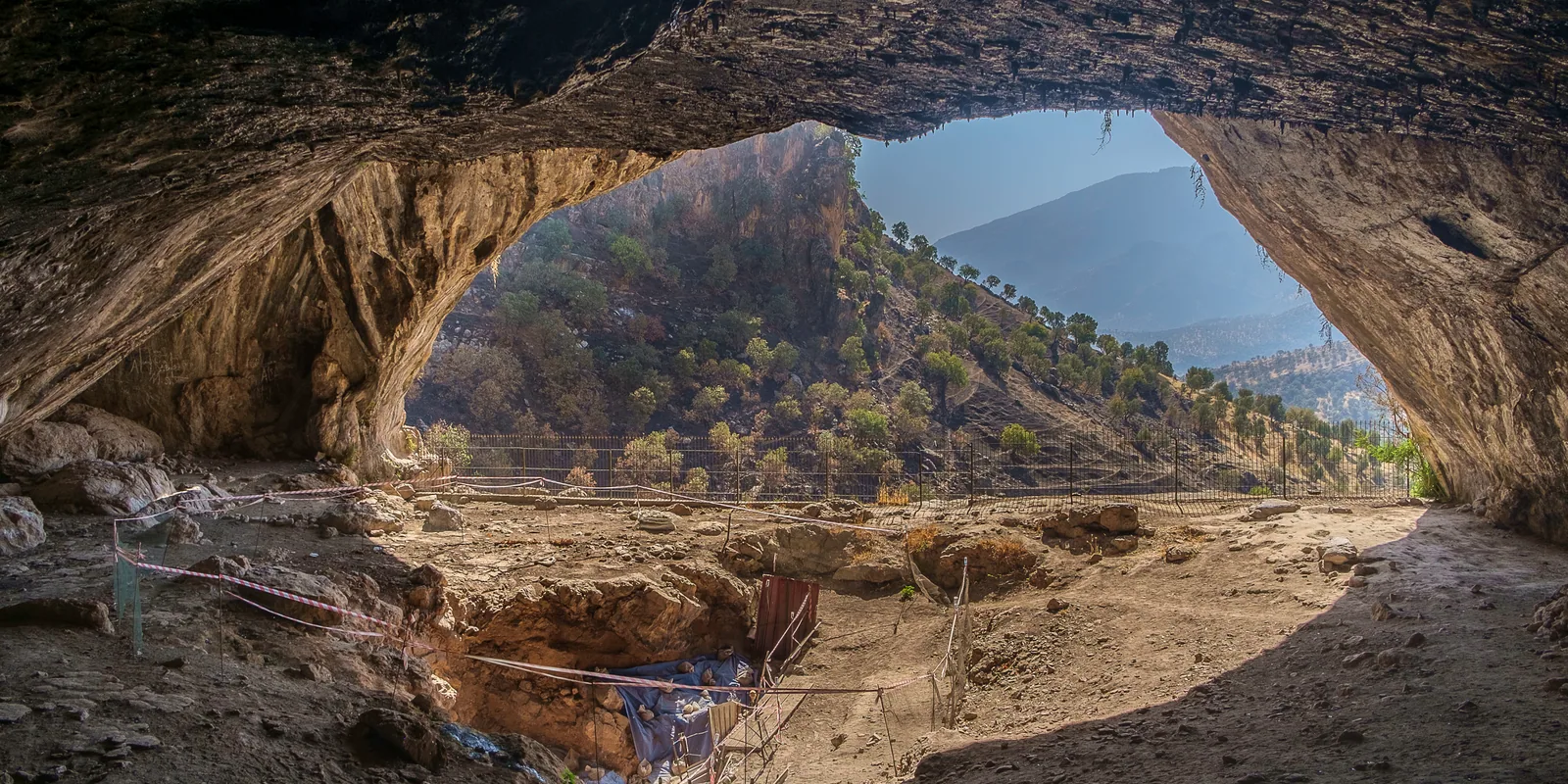
Shanidar
Age-polished, the fractured yellow bone lies
on black velvet. A shoulder-blade, older
than empires. Than the idea of kings.
But Human. The same fragile helices
lurk in those calcified cracks that weave
their patterns inside me.
A hole, sized to tempt
curious fingertips. As perfectly
round as a spear-haft, a dry clinical
puncture that must have bled,
dyed the arid soil red,
have sucked and bubbled as
some real person tried to
keep breathing as their lungs
filled with blood.
Before history, before God and bronze,
Man killed man by the caves of Shanidar.
They made art, we know.
But did they sing their funereal songs,
did they recite poems by red fragrant
tallow-light as they laid their son to rest
amidst dripping stone in the lowest cave?
Have you ever stopped to wonder at words?
At where they came from? To ask yourself why
these tall apes, stepping out upon the plains
found words for more than the real and learned to
trap each shade of feeling in a scaffold
of dry syllables?
Some say it was to woo,
That bright words are as a peacock's feathers
or a firefly's lantern, precious for being
useless, a promise sealed with a gift.
No.
I recall a child, running through summer,
down the gravel pathway to the sweet-shop,
falling, picking shards from their bloody knee,
running on, laughing. I recall that child,
crumpled like the tissue they soaked with snot,
Weeping. Afraid. Chanting some words about
sticks and stones, a cantrip which did not work
because it wasn't believed.
No.
Words are not vain plumage. Words are the claws
and teeth that rip into our own people.
Words draw lines and turn friends into others.
Killers lived in the caves of Shanidar.
Of course, they were poets.
Image By Hardscarf - Own work, CC BY-SA 4.0, source